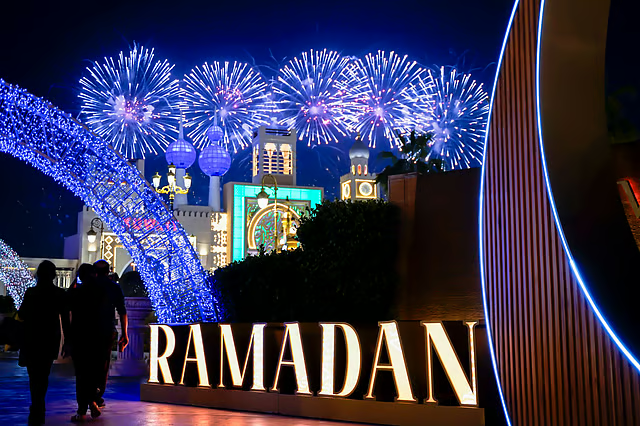
Fasting hours in Ramadan 2026 will be significantly shorter than last year, allowing worshippers to fast from dawn to dusk. Since the Islamic Hijri calendar is lunar, Ramadan begins 10 to 12 days earlier each year. The month is 29 or 30 days long, depending on the sighting of the crescent moon, and this annual variation affects the duration of the fast and its progression through the holy month. This year, Ramadan is expected to begin on February 19, although it could also begin on February 18 if Bilal is sighted. The UAE Moon-Sighting Committee will announce the official start date. Fasting in Islam involves abstaining from food and drink from dawn (Fajr prayer) until sunset. At Iftar, Muslims typically break their fast with dates and water, followed by a light meal or a full meal. Some worshippers observe a precautionary break, or imsak, about 10 minutes before dawn, although the fast formally begins at dawn.
What will be the weekly breakdown of fasting times?
The first week of Ramadan will see the fast last for about 12 hours and 46 minutes, about 30 minutes less than the 13 hours and 16 minutes of the first day of last year. Fajr will begin at 5:33 AM on Ramadan 1 and Maghrib will end at 6:19 PM. The second week will see the fast extended by 13 hours due to the delay in sunset times. Fajr will begin at 5:24 AM on Ramadan 12 and Maghrib will end at 6:25 PM.
The third week of Ramadan will see the fast last for 13 hours and 5 minutes at the half-moon point, Fajr will begin at 5:21 AM and Maghrib will end at 6:26 PM. Last week: The last days of the month will see the longest fasts, lasting about 13 hours and 27 minutes, shorter than the 14-hour fasts around 2025. The last fast of the month will be at 5:06 AM and 6:33 PM.