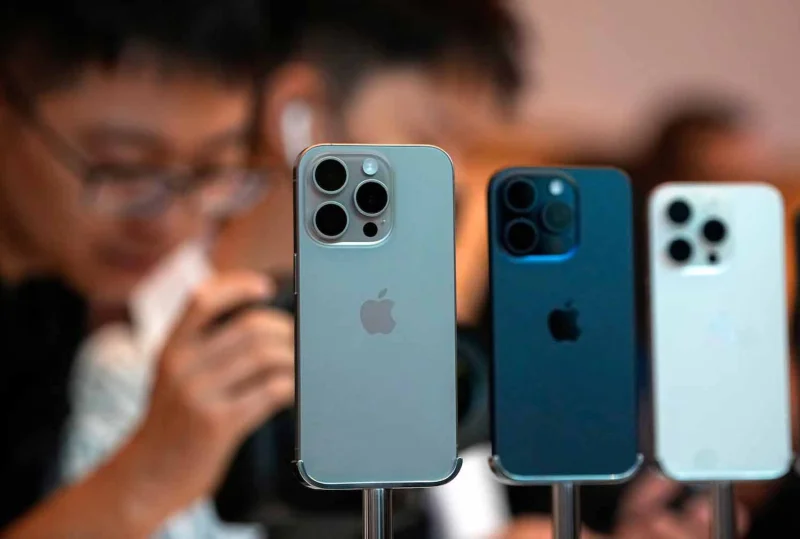
Apple is preparing to unveil its iPhone 17 series on Tuesday, with advanced artificial intelligence features expected to take the spotlight.
The tech giant has kept details under wraps about its event, branded “Awe Dropping” in invitations. The timing coincides with Apple’s usual annual launch of new iPhones, the product that drives much of its global revenue.
Despite iPhones retaining their premium status, Apple faces growing pressure to prove it can compete in the generative AI race.
“Apple’s image as being late to the AI party is a major challenge,” market research firm Canalys said in a note.
Rivals using Google’s Android have pushed AI technology aggressively, while Apple’s slower rollout of its own AI features has created delays, prompting many consumers to hold off on buying new iPhones, Canalys added.
Apple introduced its “Apple Intelligence” features late last year, but users were underwhelmed, especially with Siri. The long-awaited improvements to Apple’s voice assistant remained limited and basic.
Reports suggest Apple is planning to add AI into online search next year, alongside a major Siri upgrade. The company is also said to be in talks with Google to leverage its search and AI technology. Apple has not confirmed these reports.
“I would be surprised if there is a big announcement on Apple’s AI strategy,” Forrester analyst Thomas Husson noted. “Apple’s step-by-step innovation with the iPhone 17 may start hitting limits, especially for customers demanding more breakthrough features.”
The main attraction at Tuesday’s event is expected to be the new iPhone lineup, led by an ultra-thin “Air” model.
Analysts see this as a strategic shift, with Apple emphasizing slim design as the new premium selling point instead of larger screens. A super-thin iPhone could also pave the way for a foldable version in the future.
However, thinner phones are more expensive to produce and often compromise on battery size.
Prices of the new iPhones in the United States are expected to rise, partly due to tariffs introduced by President Donald Trump, which have increased Apple’s production costs. With most manufacturing still based in China, trade tensions directly affect Apple’s bottom line.
“Apple is managing a fragile balance between its two biggest markets, the US and China, amid ongoing trade disputes,” Canalys said.
A weaker US dollar allows Apple to raise prices at home while keeping international prices competitive.
The financial impact is already evident: CEO Tim Cook revealed that tariffs cost Apple $800 million in the last quarter, with losses projected to climb to $1.1 billion this quarter.