Audi Builds New E5 Sportback in 18 Months Using Chinese EV Expertise
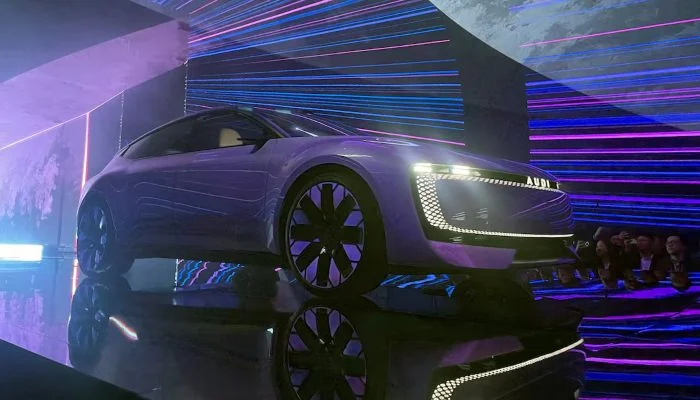
An E Concept electric vehicle (EV) from Audi, developed with Chinese automaker SAIC, is displayed at a launch event in Shanghai, China, November 7, 2024. — Reuters
When Audi executives saw the Zeekr 001 in 2021—a sleek, long-range EV with European styling—it was a wake-up call. The German automaker realized it needed to adopt Chinese technology to stay competitive.
“The Zeekr 001 back then shocked quite everyone,” said Stefan Poetzl, president of SAIC Audi Sales and Marketing. “We needed to do something about it.”
In response, Audi developed the E5 Sportback in just 18 months using technology from its Chinese partner SAIC. This included batteries, electric powertrains, infotainment systems, and advanced driver-assistance features.
Audi plans to deliver the $33,000 EV to customers in China this month. Other global automakers are also looking to use Chinese technology to speed up their EV launches. Toyota and Volkswagen have joint development plans for China-focused models with Chinese partners GAC and Xpeng.
Renault and Ford aim to take it further by building global EV models on Chinese platforms, sources said. Renault did not respond to requests for comment, and Ford declined to comment.
These licensing agreements create a growing revenue stream for Chinese EV makers while offering a win-win situation. Global automakers gain access to advanced technology to launch new EVs faster, and Chinese firms secure revenue during intense local competition and trade challenges.
“It is a very smart, win-win solution,” said Will Wang, General Manager of Shanghai-based consulting firm Autodatas.
‘China Inside’ Strategy
This approach is similar to Intel’s “Intel Inside” campaign of the 1990s. Chinese companies now offer complete EV technology packages—ready-to-build platforms for electric vehicles suitable even for smaller manufacturers.
Leapmotor has partnered with Stellantis to sell EVs outside China and is negotiating with other brands to license its technology, CEO Zhu Jiangming told Reuters.
Using ready-made Chinese EV platforms can save automakers billions of dollars and years of development, experts say. Renault was an early adopter, building the low-cost Dacia Spring EV on China’s Dongfeng platform for Europe in 2021.
Renault is now developing a new electric Twingo at its Shanghai research center, with technical support from Chinese firm Launch Design, sources said. Launch did not respond to requests for comment.
Other automakers are following suit. Ford is searching for a Chinese partner to provide EV platforms. CEO Jim Farley has tested Chinese EVs and praised Xiaomi’s SU7 electric sedan.
Volkswagen is expanding China-focused model development using platforms co-developed with Xpeng, including electronics and software designs. Analysts say traditional automakers often struggle to develop flexible EV systems quickly, making Chinese partnerships attractive.
“If it works in China, Volkswagen could apply the strategy globally,” said Yale Zhang, managing director at AutoForesight in Shanghai.
Global Opportunities and Innovation
Chinese EV makers, inspired by Tesla, have created modular platforms that reduce costs and speed development. “They are quick learners from Tesla,” said Forest Tu, former CATL executive and founder of Mapleview Technology.
CATL has licensed its battery technology to Ford and plans to export EV platforms, enabling less-industrialized countries to build their own EV brands.
Abu Dhabi-based CYVN Holdings is developing a premium EV using Nio’s technology and plans to sell it under McLaren, which it acquired in April. Future models will include more McLaren design and less Chinese technology, sources said.
CATL’s new Bedrock Chassis, unveiled in Europe at the IAA Mobility show in Munich, will allow consumers to have more choices in EV design. CATL plans to expand chassis production over the next three years.
Long-Term Risks
Despite the advantages, over-reliance on third-party technology carries risks. Former Aston Martin CEO Andy Palmer warned that automakers could become mere retailers if they depend too heavily on external platforms.
Oliver Wyman analyst Marco Santino added that using outside technology limits brand differentiation. Automakers can reduce risk by integrating their own innovations alongside Chinese technology.